Someone with a burnout can sometimes also develop physical complaints in response, such as:
- headache
- dizziness
- chestpain
- palpitations
- stomach upset or abdominal pain
The following 6 phases of a burnout:
- Employee does everything for work!
In this phase, your colleague only focuses on work, there is no time for hobbies, friends and family fade into the background. But if you ask how he/she is doing, the answer is invariably: 'Good'. However, the work is starting to suffer. - is an employee critical, cynical and dissatisfied
Others don't do the job as well as he does, at least according to him. You notice that he is critical, cynical and dissatisfied. Other team members begin to suffer from his attitude. - Employee takes distance from the team
Your team member becomes depressed, no longer chats with the team, isolates himself. He feels sick more and more often. - Employee shows different behavior
At this stage you often see that those around you ask more often if there is something wrong with him. However, the employee prefers to be left alone and does not understand the fuss. - Employee only experiences it tracking responsibilities
There is no more enthusiasm, your colleague only feels responsibilities, he has a lot to do and can no longer relax. Nothing comes naturally anymore. - Employee experiences no fun
In this phase there is nothing fun anymore, there is only emptiness and chances are that only distractions such as food, sex, alcohol, drugs can fill the void a little. Emotionally unstable, with mood swings like a rollercoaster, this manifests itself in irritability and constant dissatisfaction.On a mental level, concentration problems, forgetfulness and a constant feeling of tension can predominate. Thoughts seem foggy, fear and panic lie just beneath the surface, and self-esteem gradually sinks. - Employee suffers from depressive moods
A feeling of exhaustion, lost and insecure, he sighs a lot, he makes derogatory comments about his assignments and the work he completes. - is an employee burnout
The employee has collapsed mentally and physically. Low energy is the new normal, while hyperventilation and a tight feeling in the chest are becoming more frequent. Headaches, stomach and intestinal complaints claim their share, while muscles in the neck, shoulders and back feel tense. Palpitations and dizziness become regular companions, while fatigue determines the days.Stress hormones have taken control of the body.
The longer one waits, the higher the threshold for reintegration.It is therefore not only about early recognition of the signals that may indicate a (impending) burnout, but also about taking appropriate action. In addition, it is important to know when you are more likely to develop a burnout.
When am I at extra risk of burnout?
Anyone can become overstressed and burn out. The chance of this is greater
if you have experienced many things in the past that cause tension
if you have ever been stressed
if you have been ill a lot in the past year
if you don't know how to arrange things and who can help you
if you receive little support from those around you
if you avoid tackling or solving problems, if you always want to do well and cannot say no
Being in Balance coaching 'Back from Burnout'
The Being in Balance 'Back from Burnout' coaching program has been specially developed to effectively guide employees who have a burnout so that they can return to their work with full energy.
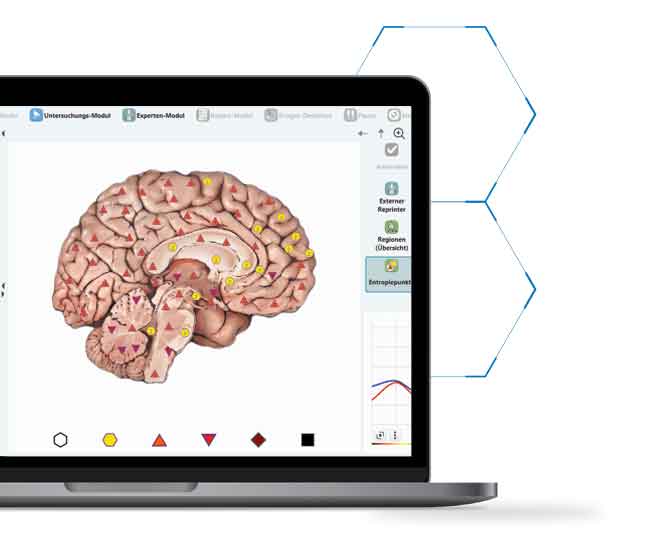
Clients indicate that they particularly appreciate the body-mind scan of Being in Balance because they can follow their own process measurably, visibly and tangibly through the biofeedback on the computer screen. For example, they see the degree of stress in their brain, autonomic nervous system, pituitary gland/hypothalamus, thyroid, stomach, liver, adrenal glands and the rest of their body and, even better, the recovery from this during their Being in Balance coaching process!
Below you can see pictures of the scan of an employee at Laurens, a large home care organization in Rotterdam with more than 5,000 employees.
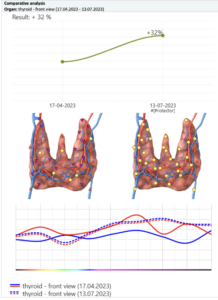
In the comparison between the measurement during sessions 1 and 5 of the thyroid and the liver respectively, we see an improvement of respectively. 32% and 27% and an overall better balance in those organs within 3 months:
At Laurens, Being in Balance coaching has contributed to the accelerated reintegration of 5 home care workers with long-term absenteeism.
We also conducted a pilot at Philips with similar results.
Laurens is now investigating how Being in Balance can be used more broadly for absenteeism due to burnout as well as for other causes of long-term absenteeism.
At PwC we did a '100 day Be Well, Work Well Challenge' with a Being in Balance scan at the start where the insights from the scan served as input for the further process. After 100 days, the final scan showed that an average stress reduction of no less than 50% had been achieved.
To conclude
As we conclude this journey through the theme of burnout, I invite you to consciously look at the preciousness of your energy. Your inner fire, your passion and resilience are precious. Let's live a life in which we cherish our energy, in which we take care of our well-being with the same dedication with which we pursue our goals.
If you are in the midst of a challenging time right now, remember: recovery starts with a small step, a conscious choice. You are not alone. It is a journey where support and guidance are key.
Being in Balance coaching can assist you on this road to recovery, with expertise, understanding and guidance that suits your needs.
Let us strive together for resilience, for a life in which we consciously manage our energy, where we take every step with care and focus on our well-being. Because in the midst of challenges and even in the aftermath of burnout, the power of recovery lies in conscious choices and guidance. Be aware of your energy, embrace self-care and see an opportunity for renewed strength in every step!
Would you like to know what Being in Balance can do for you and your employees? In 2024 it will be possible to start immediately with the 'Back from Burn-out' program. There is a special offer this month.
Want to know more about this? Contact us directly for a free introductory meeting with one of our Master coaches.